Thursday, January 24, 2008

The Black Box

We begin with a report at the Brad Blog, which at first debunks rumors of voter fraud in New Hampshire's recent primary. Brad later goes on to call attention to fraud. I have quoted only excerpts; the original has links which I did not reproduce:

-- Brad Friedman, The BRAD BLOG

Our Spidey-sense started tingling before going to bed last night and hearing reports, on MSNBC, that there were 17 paper ballots cast in Dixville Notch, NH, in its midnight, first-in-the-country voting. The report said that there were only 16 registered voters in the tiny voting precinct, yet 17 votes had been cast --- suggesting that somehow, paper ballot "voter fraud" skullduggery was afoot.

Following on that, reports throughout the day appeared that NH precincts were out of paper ballots, and voters were unable to vote.

Trouble is, both reports are either completely untrue, or wholly misleading, or both, as The BRAD BLOG was able to confirm with two simple phone calls.

Each of those reports, however, would seem to go a long way towards giving the impression that paper ballots are a bad idea, and that "voter fraud" is easy to commit when using them. Given that one of those reports seems to have begun on The DRUDGE REPORT earlier today, we're not particularly surprised that the MSM kept repeating the easily-debunked stories running all day.

That, even while there are reasons to be concerned about how the paper ballots used in the New Hampshire Primary will actually be counted by the hackable Diebold optical-scan systems used in the state, as controlled and programmed by an outrageously bad private contractor there...


In the first section, reproduced above, the post begins by explaining how some reports were checked, and found to be erroneous. In the last paragraph, however, some cause for concern is given that is depicted as more legitimate.

The next two sections talk about paper ballots and so on in New Hampshire. Then:

What You Should Actually Be Concerned About

However, for those in the media interested in actual concerns about the integrity of today's NH Primary, we'd strongly recommend the following video primer. In it, you'll learn that the Diebold optical-scan system used across most of New Hampshire (some 40% of precincts still count paper ballots by hand, at the precinct), can be easily rigged by insiders, and only if the paper ballots are properly audited by hand, in some fashion, can the results of the op-scanners be trusted in any way, shape, or form.

Reporters would do well to take note, particularly given the tightness of the race at this hour on the Democratic side, between Obama and Clinton --- curious, given the final Zogby polling numbers which were dead-on on the Republican side, but, so far, seem wildly off on the Dem side. Zogby's numbers had predicted an Obama blowout, 42/29 over Clinton.

The machines used in the state are the same ones seen being hacked in HBO's documentary, Hacking Democracy. As well, a single private company with a very bad record, LHS Associates, Diebold's exclusive distributor and technical contractor in New England, runs the elections and controls the vulnerable memory cards for the voting systems across the state. That company has an horrendous record of lax security policies and has admitted to having replaced memory cards, on a whim, on their own, in the middle of past elections.


The issue with machines with any kind of computerized technology is that if their integrity has been compromised, it is difficult to notice that. For example, the programming can be adjusted so that, in a race among candidates A, B and C, of every six votes for B, one is not counted or counted for A instead, and of every five votes for C, one is counted for A instead.

Unlike a hand tally, where other people can visually verify the count, a machine is a black box -- the inside does not see the light of day, and most people do not really know what is happening in there.

If the reprogamming is done foolishly, it will be obvious. For example, polling indicates 30% favor candidate A, 45% favor B, 20% favor C, and the remaining 5% are undecided. If suddenly the election results were that 85% voted for A, we would be suspicious.

But, anyone smart enough and connected enough to reprogram voting machines is not going to make such a foolish mistake. Anyone who is going to do it is going to do it with subtlety, and such subtlety will go a long way to ensuring that it does not get widely recognized -- it can be detected, just not widely recognized.

A slight modification of the algorithms, programming, and electronic mumbo-jumbo is all that is needed to tip a race -- because it is subtle, the public will keep the public off the trail. For every one person who questions the matter, another will appear who will see nothing "obviously" wrong, and who will then begin to disparage the concerns of the one by using pejorative words like "conspiracy" and "truther". Will there be a fair consideration of the matter?

From New Hampshire primary scandal: Kucinich calls for recount (also here), which begins:

Amidst a rising chorus of angry voices protesting the flawed results in the New Hampshire primary, Dennis Kucinich has called for a recount to restore, "public confidence in the election process."

Recalling the traumatic collapse of the presidential election that led to the imposition of an unelected presidency on a nation that prides itself as, "the land of the free," Kucinich explained his motivation for calling for a recount in New Hampshire, "Ever since the 2000 election . . . the American people have been losing faith in their belief that their votes were actually counted."

Immediately after the New Hampshire results began to pour in, astute observers of presidential elections became troubled since the tabulations did not correspond to either the results of nine major polls or the exit polling compiled in statewide surveys on the day of the vote.

Although the count giving Hillary Clinton a slight majority over Barack Obama was described as an "upset" in the mainstream media, many Americans recalled their serious concerns over the deeply flawed presidential elections of 2000 and 2004 that cast a darkening shadow over the entire electoral process in the United States even today.

Pollsters have been at a loss to articulate a palatable explanation for Clinton's apparent victory, and the suspicion that it was more apparent than real is gaining traction with the general populace.

A film revealing a trace of emotion in one of her conversations with voters on the day preceding the election was seized upon as an argument for a last minute surge for Senator Hillary Clinton. However, after viewing the tape many people remain unconvinced that such a trivial epiphany could transform the dynamics of an election that had placed Barack Obama in command of a formidable majority.

Several pundits have argued that racism undermined Obama's campaign at the last minute, but this explanation failed to consider his victory in lilywhite Iowa less than one week earlier.


The article then goes on to offer some thoughts as to who might be behind this, and connects Karl Rove to Dick Morris and the Clinton campaign -- birds of a feather?

Here is additional background.

With the kind of money floating around in US Presidential elections, anything can be bought. With the kind of power up for grabs, nothing is sacred.

Senator Obama's weakness is that he is a relative newcomer to big politics, a relative outsider to Washington, at least when compared to Senator Clinton, who has been a US Senator since her swearing in following her 2000 election, and who was the First Lady (co-President?) for eight years previously.

Obama may seem like a breath of fresh air to his supporters, but he is no match for the Clinton machine.

Conquest or destruction of America at the hands of Islamic militants would be far, far less likely, if we could effectively deal with corruption here at home.

It is the corruption that is a threat. It is apathy that will bring us down. Allah, standing by watching, will only get the credit -- appreciation from a host of militants eager to embrace their ration of virgins, as government of the people, by the people, and for the people perishes from this earth, entombed in a black box inside which no light can be seen.

With this post I begin a new label: US Politics.

Wednesday, January 23, 2008

"Submission" in Danglish

The Danish Muslim Party has a website with a press release. (Via Mathaba.)

It is written in Danish and English, alternating -- actually, it kind of looks like Danglish, but that's another story.

Here I have copy-and-pasted key points, with my comments interspersed.

Please note that the author of this press-release is apparently not a native speaker of English. I thank the author for the English translation, which makes the information more accessible for the rest of us.

Danish muslim partys only agenda is to get muslims into danish politics and into the parliament, no matter what our ideas and religious or political beliefs are.


So, if the person is an apostate, will you still work to get him (her?) elected?

What if the person is flat out takfir?

Or, is the person a Muslim because that person holds certain "ideas and religious or political beliefs"?

Idea behind this is simply this: since we live in Denmark and here is about 700 000 muslims, we could actually have about 60 ( =1/3 ) muslim representatives in danish parliament, and therefore also in danish government, - and therefore we feel it would be worthwhile to get muslim candidates, so that also muslims ideas, values and viewpoints would become heard,respected and understood better in danish politics and in danish government and parliament.This way we could also stop discrimination in danish society.


In principle, there is absolutely nothing wrong with this. It is called "enfranchisement", and it beats the hell out of suicide bombings.

What I am curious about is what is the discrimination that is going to be stopped?

We have Freedom of religion in Denmark , and therefore everyone have right to practise their religion what ever it is, and also society must respect every religion and accept its manners and beliefs.


And those who are not Muslims will have to pay the tax and feel themselves subdued? Because that is one concern among us infidels.

Another concern is that if you have a Bible and a cross in Saudi Arabia, they get confiscated if found -- assuming you're lucky. Christians get flat out killed-on-sight in many parts of the Islamic world. That's what a Muslim-majority country means in some places. This is another concern among us infidels.

DF partys opinions and agenda may be criminal , and may become judged as a crime if judged according to international laws.


Perhaps someone familiar with Danish politics can comment on who the DF is?

Treating immigrants wrongly will in the future cause riots and many problems- and therefore it is a must to get muslims into politics-not throw immigrants out of life in Denmark.


I think this is intended as a warning, not as a threat.

Here comes the good part:

'Muslim party' will be biggest party of Denmark- and it may be soon.First day after Turcey becomes EU member country- about one million 20-50 years old muslims moves to Denmark?And after that Denmark will be a muslim country?Be ready!
But we may not wait that, - we must be a party of government already now.


As soon as the doors to immigration from the Islamic world are really opened, we are going to see some changes -- that is what they are promising and preparing for.

Countries of the EU, beware: you have been warned.

Many danes feel this strange, because Denmark has not have muslim government before- but we can assure you that everything will be better in muslim Denmark:
No drugs,no crime, peace, and humanity- instead of drug culture,immorality,possibly human rights crimes and violence which we have now.


Sorry, but between the King of Saudi Arabia having to pardon a rape victim and the narcotrafficking of Al Qaeda, Kosovars and the Turkish Deep State, I just don't think things are going to be better.

In fact, judging from Afghanistan (of the Taliban), the Gaza Strip, and the Kingdom of Saudi Arabia, I suspect that Denmark would be just one giant step closer to Hell-on-Earth: honor killings, female genital mutilation, stoning of rape victims, destruction of cultural and historical monuments, denial of basic human rights to women and religious minorities.... We know this as the Dark Ages, and I suspect it would return quite quickly to Denmark.

If a member of the Danish Muslim Party should by chance see this blog post, feel free to contact me. I would be happy to post any rebuttal or clarification you may have. Please identify what role you have in the DMP, how long you have been affiliated with the DMP, and other information that may help me and my readers assess your credentials to speak on behalf of the DMP. I will then check out your credentials, and, if they check out, I will be happy to post your comments. Your comments must be in English. Your website seems to make an effort to be polite and civilized, but just to cover the bases, please note I will not post any inappropriate or offensive language.


Also of interest: Those Scaredy-Cat Danes at Gates of Vienna.

With this post, I begin a new label: Denmark.

Hat tip to my email tipster.

Tuesday, January 22, 2008

Genesis, Part 10

We continue from Part 9 reviewing a February 20, 1995, cable from the US Embassy in Islamabad to the US Secretary of State's office.


STRUCTURE OF THE MOVEMENT
-------------------------

11. ASKED ABOUT THE STRUCTURE OF THE MOVEMENT, [redacted] SAID THERE IS A "HIGH COUNCIL" OF EIGHT AND A LOWER SHURA OF 22. THE MEMBERS OF THE HIGH COUNCIL ARE: MOHAMMED OMAR, HAJI BASHAR, MOHAMMED HASSAN (GOVERNOR OF KANDAHAR), BAS MOHAMMAD, AHMADULLAH, ABDUR BAHMAN, QARI INSANULLAH AND ABDUL-SALAM. THE FIRST THREE NAMES ARE THE MOST IMPORTANT, [redacted] OBSERVED, WITH MOHAMMED OMAR OCCASIONALLY CHANGING THE OTHER FIVE. ALL ARE MAULAVIS EXCEPT FOR HAJI BASHAR, AND ALL FOUGHT DURING THE JEHAD, HE NOTED. ALSO IMPORTANT IS THE TALIBAN MILITARY COMMANDER, MULLAH BORJAN, WHO IS DIRECTING THE MOVEMENT'S OPERATIONS AT KABUL. THE 22-MEMBER SHURA, OF WHICH [redacted] SAID HE WAS A MEMBER, DEALS WITH MORE ADMINISTRATIVE ISSUES THAN POLICY MATTERS AND ALL ITS MEMBERS ARE "FROM THE BOTTOM TO THE MIDDLE OF THE ULEMA."

12. THE TALIBAN'S IMMEDIATE AIM, [redacted] SAID, IS TO DISARM ALL OF AFGHANISTAN AND ESTABLISH ONE MUSLIM GOVERNMENT FOR THE COUNTRY. ASKED ABOUT ELECTIONS, [redacted] SAID THE TALIBAN BELIEVE IN ELECTIONS, BUT WOULD WANT TO WAIT UNTIL ALL THE REFUGEES RETURN TO THE COUNTRY AND THERE WAS A MORE PEACEFUL ATMOSPHERE. [redacted] SAID HE IMAGINED A GOVERNMENTAL SET-UP IN WHICH THERE WOULD BE ONE NATIONAL SHURA AND ALSO INDIVIDUAL PROVINCIAL SHURAS. HE SUGGESTED THAT THE CURRENT TALIBAN SHURA WOULD DECIDE WHO COULD RUN IN THE ELECTIONS. COMMENTING ON THE SUCCESS OF THE DISARMAMENT CAMPAIGN IN KANDAHAR, [redacted] JOKED THAT WHEN HIS SON HAD BEEN BORN A FEW DAYS PREVIOUSLY, THERE WERE NO GUNS IN THE DISTRICT TO ANNOUNCE THE EVENT TO THE VILLAGE (TRADITIONALLY, GUNS ARE FIRED INTO THE AIR TO SIGNAL THE BIRTH OF A SON).


The Taliban are in favor of gun control.

That should tell you something, right there.

The Taliban's current MO is to kill off local tribal leaders in Waziristan, and replace them with people friendly to themselves. The people in Waziristan are not well-enough armed to defend themselves against what is essentially a foreign invasion, foreign even though the Taliban originated in these areas along the border between Pakistan and Afghanistan. Those Saudi-funded Arab jihadis show up, and there goes the neighborhood -- it happened in Bosnia, it happened in Afghanistan, it happened in Kosovo, it happened in Iraq, now it's happening in Waziristan.

But, back to the cable:

NOT AGAINST THE SHI'A OR MINORITIES
-----------------------------------

13. ASKED ABOUT CONCERNS THAT THE PASHTUN, SUNNI TALIBAN WOULD NOT BE ACCEPTED BY THE SHI'A AND ETHNIC MINORITIES, [redacted] SAID PASHTUNS ARE 70 PERCENT OF AFGHANISTAN'S POPULATION, BUT THAT THE TALIBAN THOUGHT IT MORE IMPORTANT TO MAKE THE MINORITIES HAPPY. HE CLAIMED THERE WAS A LARGE SHI'A POPULATION IN THE TALIBAN-CONTROLLED PROVINCE OF ORUZGAN, AND SAID THERE HAD BEEN NO PROBLEMS. "THE SHI'A ARE MUSLIMS, WE HAVE LIVED WITH THEM FOR 200 YEARS" [redacted] DECLARED. "THEY HAVE IMAM BARAS AND WE HAVE MOSQUES, BUT WE WILL NOT INTERFERE WITH THEM," HE ADDED. THE SHI'A HIZB-I-WAHDAT PARTY IN KABUL HAD BEGUN NEGOTIATIONS WITH THE TALIBAN, [redacted] SAID, AND BOTH SIDES WERE PLEASED WITH THE DISCUSSIONS.

14. ON THE ETHNIC ISSUE, [redacted] SAID THE TALIBAN WOULD DO "TOO MUCH" TO KEEP THE MINORITIES HAPPY. "WE WILL MAKE AN UZBEK GOVERNOR IN ATKIA AND A TAJIK GOVERNOR IN KANDAHAR," HE COMMENTED, "ALL THIS TO KEEP THEM HAPPY." CITING THE EXAMPLE OF DOSTAM AND FEARS THAT THE COUNTRY COULD BE DIVIDED, THE [redacted] SAID DOSTAM WILL BE FREE TO PARTICIPATE IN THE POLITICAL PROCESS IN AFGHANISTAN, BUT MUST SURRENDER HIS WEAPONS AND ABIDE BY THE SHARIAH LAW. "EVERYONE WILL BE SUBJECT TO THE LAW," [redacted] NOTED.


This Taliban representative "SAID THE TALIBAN WOULD DO 'TOO MUCH' TO KEEP THE MINORITIES HAPPY."

What are they, Democrats? Or the governing elite in Sweden or the UK?

(ROFLMAO!)

That thing about surrendering weapons fits right in, too -- disarm the people, then they can't resist the draconian laws you are putting in force.

Again, sounds like the Democrats & PC elite.

15. [redacted] SAID DOSTAM HAD RECENTLY SENT EMISSARIES TO THE TALIBAN, PROMISING TO SURRENDER ONCE "CERTAIN CONDITIONS" ARE MET. RABBANI HAD SENT SIMILAR MESSAGES, [redacted] NOTED, BUT MASOOD "WANTS TO FIGHT." IN KABUL, HARAKAT'S COMMANDER SIDDIQULLAH IS READY TO DEFECT TO THE TALIBAN, AND [redacted] SAID HE HAD ACCOMPANIED REPRESENTATIVES OF KHALIS, SAYYAF AND MOHEMMADI TO KANDAHAR WHERE THEY HAD PLEDGED TO SUPPORT THE MOVEMENT. ASKED ABOUT ISMAEL KHAN'S RELATIONS WITH THE TALIBAN, [redacted] SAID "ISMAEL KHAN IS A GOOD MAN, NOT THE BEST, BUT GOOD." KHAN IS READY TO SURRENDER TO THE TALIBAN, [redacted] JUDGED, AND COULD BE COUNTED ON TO OBEY THE MOVEMENT. ISMAEL KHAN'S COMMANDERS AROUND SHINDAND AIR BASE AND IN HALF OF HERAT PROVINCE ALREADY HAD PLEDGED SUPPORT TO THE TALIBAN, HE NOTED.


COMMITMENT TO DRUG ERADICATION
------------------------------

16. RESPONDING TO A QUESTION CONCERNING THE TALIBAN'S COMMITMENT TO DRUG ERADICATION, [redacted] SAID HE COULD BEST DESCRIBE DEVELOPMENTS IN HIS HOME DISTRICT OF MAROOF. THERE, HE SAID, THE TALIBAN LEADER ABDUL-SAMAD HAD BEEN APPROACHED BY POPPY FARMERS AND ASKED WHETHER THEY COULD CONTINUE TO GROW THEIR CROP. ABDUL-SAMAD HAD CALLED TOGETHER 30 MEMBERS OF THE ULEMA, WHO ISSUED A PUBLIC STATEMENT OPPOSING THE GROWING AND TRADING OF NARCOTICS, AFTER WHICH THE FARMERS HAD BEEN TOLD THAT THEY WOULD BE PUNISHED UNDER THE SHARIAH IF THEY CONTINUED POPPY PRODUCTION. IN CONCLUSION, [redacted] OBSERVED THAT "THE TALIBAN BELIEVE NARCOTICS ARE BAD."


Ah, but "bad" is relative. Narcotics can be permitted, if they get sold to infidels, and if the Taliban get a cut.


ATTITUDES TOWARDS OTHER COUNTRIES
---------------------------------

17. SINCE HE EXPECTED TO HAVE A LEADERSHIP ROLE IN FOREIGN AFFAIRS ONCE THE TALIBAN SUCCEEDED IN REMOVING ALL THE COMMANDERS FROM AFGHANISTAN, [redacted] WAS EAGER TO TALK ABOUT THE TALIBAN'S ATTITUDES TOWARDS OTHER COUNTRIES. HE SAID THE MOVEMENT SOUGHT GOOD RELATIONS WITH THE ISLAMIC COUNTRIES, BUT DID NOT LIKE SAUDI ARABIA'S EFFORTS TO INTERFERE IN AFGHAN RELIGIOUS MATTERS. SIMILARLY, THE PAKISTAN GOVERNMENT'S DESIRE TO INTERFERE IN INTERNAL AFFAIRS, AND THE EFFORTS OF ISI TO TREAT AFGHANISTAN "LIKE ANOTHER PROVINCE" ARE NOT APPRECIATED, HE OBSERVED. SAYING THAT HE KNEW PERSONALLY [redacted] COMMENTED THAT "AFGHANS ARE PROUD PEOPLE WHO DO NOT LIKE THE PAKISTANIS ALWAYS TRYING TO RUN THINGS AND PLACE THE AFGHANS ON A LOWER LEVEL." THE TALIBAN WANT VERY GOOD RELATIONS WITH THE U.S., HE NOTED, PARTICULARLY SINCE THE U.S. HAD BEEN SO HELPFUL IN THE JEHAD. [redacted] SAID THAT THE TALIBAN REALIZE THAT THE U.S. AND THE U.N. DO NOT WANT TO DO ANYTHING BUT TO HELP THE AFGHANS.


Did this guy know that somebody in Pakistan was helping set up the Taliban?

A province of Pakistan, indeed -- and a very troubling one, it must have seemed to somebody.

18. ASKED TO COMMENT ON THE TALIBAN'S RELATIONS WITH THE U.N., [redacted] SAID THE BEST THING WOULD BE TO ARRANGE A MEETING WITH HAJI BASHAR AND MOHAMMED OMAR TO DISCUSS THE MATTER. HAJI BASHAR WOULD RETURN FROM PERFORMING UMRA FEBRUARY 26, AFTER WHICH A MEETING "IN SECRET" COULD BE ARRANGED. THE SECRECY WAS NECESSARY, HE SAID, BECAUSE OF EFFORTS BY THE ENEMIES OF THE TALIBAN TO PORTRAY THEM AS STOOGES OF OUTSIDE POWERS. "PEOPLE ARE SAYING BABAR, THE U.S. OR THE U.K. ARE BEHIND US," THE MAULAVI NOTED, "AND WE CANNOT DO ANYTHING WHICH MIGHT GIVE SUPPORT TO THIS VIEW." [redacted] PROMISED TO BE IN TOUCH THROUGH [redacted] ABOUT THE MEETING.

19. AT THE CLOSE OF THE CONVERSATION, [redacted] RAISED THE TOPIC OF PASHTUNISTAN. [redacted] SAID THE DURAND ACCORD, LIKE THE LEASE OF HONG KONG, "WAS ABOUT TO EXPIRE." PAKISTAN HAD TRIED TO PRESSURE RABBANI INTO EXTENDING THE AGREEMENT, BUT HAD FAILED, [redacted] CLAIMED. [redacted] SAID THE ISSUE OF PASHTUNISTAN COULD BE ADDRESSED LATER, BUT NOTED THAT THE TALIBAN ARE NOW CAUGHT UP IN FIGHTING, TRYING TO BRING PEACE TO AFGHANISTAN.


Aha! The Durand Accord was "about to expire." What were we talking about in Talibanistan, Part 2?

Maybe Pakistan is on the road to being dismembered by the Taliban.

Maybe "Pashtunistan" will join Afghanistan and whatever is left of Pakistan to become provinces of Talibanistan.


20. COMMENT: [redacted] APPEARED TO BE ABOUT [redacted] YEARS OLD, SPOKE A LITTLE ENGLISH, AND CLEARLY WAS WELL DISPOSED TOWARDS THE UNITED STATES. HIS IN-DEPTH KNOWLEDGE OF TALIBAN EVENTS AND PERSONALITIES LENDS CREDENCE TO HIS CLAIM TO BE ONE OF THE MOVEMENT'S INSIDERS. END COMMENT.


Well, that's nice: he liked us.

Monday, January 21, 2008

Talibanistan, Part 2

We continue from Part 1 with our review of the March 22nd, 2007, article The Truth About Talibanistan by Aryn Baker, Kabul, Afghanistan.

After 9/11, Islamabad initially left the tribal areas alone. But when it became obvious that al-Qaeda and Taliban militants were crossing the border to escape U.S. forces in Afghanistan, Pakistan sent in the first of what eventually became 80,000 troops. They had some success: the Pakistani army captured terrorist leaders and destroyed training camps. But the harder the military pressed, the more locals resented its presence, especially when civilians were killed in botched raids against terrorists.


At first, the Taliban were perhaps not seen as outsiders as much as federal troops from Islamabad were -- after all, the Taliban had their roots in these areas in Pakistan along the border with Afghanistan.

In that context, any misstep on the part of Pakistani forces would only serve to drive the Waziristan locals in these areas closer to the Taliban.

But, the reaction of the locals to the arrival of the Taliban should have been more along the lines of "Guess who's coming to dinner" because, as we have seen, the Taliban have been killing off the traditional local leaders in Waziristan, and replacing them with Taliban-friendly leaders.

As part of peace accords signed last September with tribal leaders in North Waziristan, the Pakistani military agreed to take down roadblocks, stop patrols and return to their barracks. In exchange, local militants promised not to attack troops and to end cross-border raids into Afghanistan. The accords came in part because the Pakistani army was simply unable to tame the region. Over the past two years, it has lost more than 700 troops there. The change in tactics, says Gul, was an admission that the Pakistani military had "lost the game."


Three years ago, one prominent warlord in South Waziristan, Baitullah Mehsud, about whom I have begun another series of posts, signed a deal with Islamabad that was billed as his surrender. He pledged he would not associate with Al Qaeda, and that he would not attack federal forces, and for a while, the area was described as peaceful, especially when compared with North Waziristan -- but, things changed, of course.

Even with a resulting relative peace, however, one questions Islamabad's decision, which seems to have been an abrogation of authority in an area not known to submit to outside governments. As I have pointed out, it is reminiscent of the Wild West.

The army isn't the only one paying the price now. Since Pakistani forces scaled back operations in the border region, the insurgency in Afghanistan has intensified. Cross-border raids and suicide bombings aimed at U.S. and NATO troops in Afghanistan have tripled, according to the senior U.S. military official. He concedes that "the Pakistanis are in a very difficult position. You could put 50,000 men on that border, and you wouldn't be able to seal it."


Islamabad is confronted with a quagmire. This region will eat up Pakistan's army, and Pakistan's budget.

Washington, by going deeper into debt, can underwrite Islamabad's efforts here, and fund the war, but there still remain the ramifications of military intervention by the federal government in these areas -- will the people resent Islamabad more, and will powerful elements in Pakistani society view Musharraf as a puppet of the Great Satan, jeopardizing his power and even the stability that Pakistan now has, a stability that is relative compared to what could happen?

And what is it that could happen?


Pakistan is a rather artificial state, the product of old colonial boundaries, such as the Durand Line. In a worst-case scenario, Waziristan isn't the only area that might achieve not just de facto but de jure independence from Islamabad.

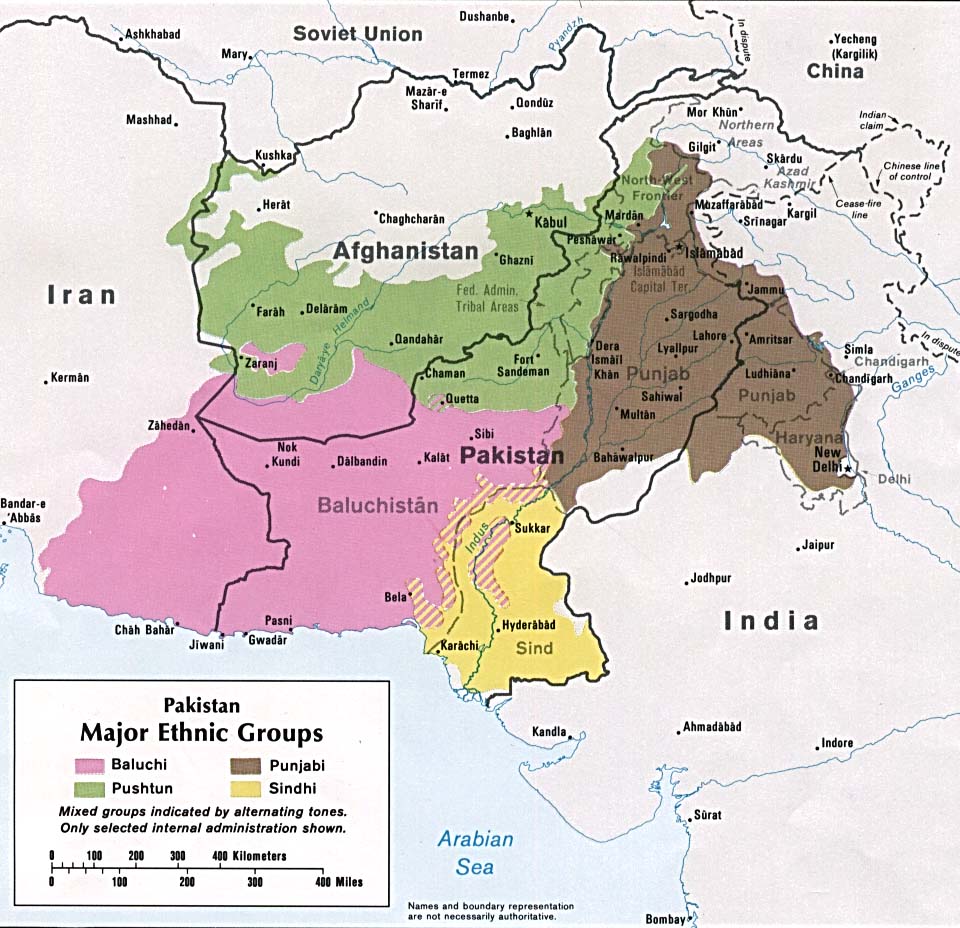
The Pashtuns, who are a significant minority on both sides of the border, could finish with their own homeland -- Pashtunistan -- as could the people of Balochistan. (See also Before and After; also, watch for upcoming posts of the Genesis series to see what the Taliban thought about Pashtunistan.)

The troop drawback has allowed Pakistani militants allied with the Taliban to impose their will on the border areas. They have established Shari'a courts and executed "criminals" on the basis of Islamic law. Even Pakistani-army convoys are sometimes escorted by Taliban militants to ensure safe passage, a scene witnessed by TIME in North Waziristan one recent afternoon. "The state has withdrawn and ceded this territory," says Samina Ahmed of the International Crisis Group. "[The Taliban] have been given their own little piece of real estate."


We have addressed this in recent posts.

This is another ramification of the instability resulting from Musharraf's treatment of Pakistan's Supreme Court early last year, and resulting from Benazir Bhutto's assassination right at the end of the year: troops are needed to restore order in the population centers, which means fewer are available for places like Waziristan, where the government in Islamabad is already losing the battle against militants and extremists.

The militants are using sympathetic mosques in Talibanistan to recruit fighters to attack Western troops in Afghanistan, according to tribal elders in the region. With cash and religious fervor, they lure young men to join their battle and threaten local leaders so they will deliver the support of their tribes. Malik Haji Awar Khan, 55, head of the 2,000-strong Mutakhel Wazir tribe of North Waziristan, was approached a year ago to join the Taliban cause. When he refused, militants kidnapped his teenage sons. "They thought they could make me join them, but I am tired of fighting," says Khan, who battled alongside the Afghan mujahedin in the war against the Soviets. "This is a jihad dictated by outsiders, by al-Qaeda. It is not a holy war. They just want power and money."


The communities along the border were a source of support during the jihad against the Soviet occupation. Later, these areas provided support and recruits for the Taliban, whose movement arose in the Kandahar area.

Now, however, it is these Arab-Afghan mujahideen, of whom we have previously spoken, who are active in this area, and these guys are truly outsiders. Consider this in the context of what we recall from Baitullah Mehsud, Part 2: these Taliban and their friends are essentially foreign invaders, and have killed and replaced the local tribal leaders.

The fierce independence of the peoples in these tribal areas could quite possibly be turned against the Arab-Afghan invaders. If the US and Pakistan together offered the locals help in driving out the Taliban/Al Qaeda alliance, with a firm and serious commitment to leave themselves after the mission was accomplished, restoring the tribal areas to their relative independence from Islamabad, the Arab-Afghan mujahideen might find that they have overstepped their boundaries -- literally -- and are now in deep trouble.

(On top of that, although I won't go into it here, some reports indicate that all might not be cosy between the Taliban and Al Qaeda.)

Tribal leaders interviewed by TIME say they do not support the aims of the jihadists. But the Taliban's campaign of fear has worn down local resistance. Malik Sher Muhammad Khan, a tribal elder from Wana, says, "The Taliban walk through the streets shouting that children shouldn't go to school because they are learning modern subjects like math and science. But we want to be modern. It's not just the girls. In my village, not a single person can even sign his name." Khan estimates that only 5% of the inhabitants of Waziristan actively support the militants. Others benefit financially by providing services and renting land for training camps. The rest, he says, acquiesce out of fear. A few months ago, militants stormed his compound in retaliation for his outspoken criticism of their presence in the area. During the melee, a grenade killed his wife. "If I had weapons, maybe I could have saved her," he says. "We have no way to make them leave."


Linking up with local people and helping them throw out the invaders... does the West not have military units that train and equip for this? Was this not an important mission during the Cold War? And NATO, that Cold War alliance, has 50,000 troops right across the border -- potentially powerful support for such a Special Forces kind of mission.

We will conclude our review of this article in Part 3.

Sunday, January 20, 2008

English Rose

English Rose is back.

Baitullah Mehsud, Part 2

In Part 1, we heard the name of Baitullah Mehsud, who is being blamed for the attack that killed Pakistan's Benazir Bhutto. Here we begin to learn more about him.

First, a little background is in order. A jirga is an assembly of leaders, meeting to decide issues of government. Loya Jirga is literally the Grand Assembly. It was in a Loya Jirga that Temujin was declared by Mongolian tribal leaders to be Ghengis Khan, the Universal Ruler. Currently, the expression is used in Afghanistan, where the Meshrano Jirga, or House of Elders, is the upper house of Afghanistan's National Assembly, and serves in a more advisory capacity, while the the Wolesi Jirga, or House of the People, is the lower house of Afghanistan's National Assembly, and bears most of the Assembly's burden of lawmaking. This could be compared to the Islamic concept of a Shura.

Now, to visualize where we are talking about, here is a map, shamelessly pirated from Wikipedia, of this part of Pakistan, along the border with Afghanistan. The green area is Pakistan's North-West Frontier Province (NWFP), while the blue area is Pakistan's Federally Administered Tribal Areas (FATA). Waziristan is on the extreme left side of the image, in the west of the area mapped; the agency of North Waziristan has a long share of the border with Afghanistan, and South Waziristan is below it.


Here is a close-up of South Waziristan. This map is in a PDF file that can be found surfing the FATA website. Notice that South Waziristan also has a chunk of border common with Afghanistan.


From an article now eighteen months old, entitled Baitullah Mehsud: South Waziristan's Unofficial Amir by Sohail Abdul Nasir (July 5, 2006) we have the following:

Baitullah Mehsud: South Waziristan's Unofficial Amir

Militancy in Pakistan's tribal areas gave birth to a new generation of leadership. Most of the traditional tribal elders who constitute the jirga system have been killed at the hands of the local Taliban; those who survived this assassination strategy fled to safer locations in other areas in the North-West Frontier Province. In the last two years, this new generation of leaders has established control over certain local Taliban groups. Yet, there are some leaders that have established control all throughout the tribal agencies. Baitullah Mehsud is one of the most prominent leaders among the local Taliban, virtually governing all of South Waziristan agency (Daily Times, March 31).


Notice that the Taliban have reportedly killed, and themselves replaced, the traditional local leadership in areas of Pakistan.

Mehsud came into prominence when tribal leader Nek Mohammad was killed by security forces during a missile attack. Thirty-two years-old, Baitullah Mehsud was born in Landidog, a small tribal village situated on the fringes of South Waziristan. He has four brothers—Mohammad Yaqoob, Mohammad Ishaq, Yayha Khan and Zahir Shah—and is the son of the late Mohamad Haroon. Unlike local Taliban leaders in North Waziristan—who are recognized religious scholars who run their own seminaries—Mehsud and other local Taliban leaders in South Waziristan are not as well educated. Baitullah Mehsud did not finish regular schooling or religious schooling. He belongs to Broomikhel, an offshoot of sub-tribe Shabikhel, which is a part of the larger Mehsud tribe. Baitullah is married and is very tough physically and mentally. Although he is not well educated, he is famous for his political acumen and military skills. His colleagues describe him as a natural leader who has great ability to infuse vitality among his followers.


In other words, he's a common mobster.

Twelve years ago, as a young madrassa student, he was greatly inspired by Taliban ideology and frequently went to Afghanistan as a volunteer to join in the Taliban's enforcement of Sharia and to offer his services. As a traditional tribal man, he is an expert at using small arms. When speaking to this author in June, a person from Mehsud's native village said that he has not, however, been credited victory in any significant gun battle or skirmish, unlike Taliban leaders in Afghanistan.


"Thug" might be the better word.

There are a number of analogies between Mullah Omar, chief of the Taliban in Afghanistan, and Baitullah Mehsud. Both leaders shun the media and as a result they are not pictured in photographs. This makes it difficult for security forces and the outside world to recognize them. Omar and Mehsud vow jihad, and they are constantly on the move from one hideout to the next in order to avoid arrest. Baitullah has pledged himself to Mullah Omar, even though he signed a deal with the Pakistani army in February 2005. Baitullah was appointed as Mullah Omar’s governor of the Mehsud tribe in a special ceremony attended by five leading Taliban commanders (Rediff.com, March 10). One of them was Mullah Dadullah (Terrorism Focus, March 21). It is said that Pakistani security forces do not take military action against Baitullah because he has assured them that he will not attack the security forces (Rediff.com, March 10). The local Taliban are considered to be his own private army—although the army's actual numbers are not known, it is believed that his armed followers number in the thousands. These men are instrumental in establishing his writ in South Waziristan. Tribal society is already conservative and religious, so Baitullah does not need to do much in order to enforce Sharia.


We first learned a little about Mullah Omar in Genesis, Part 9.

On February 7, 2005, he signed a deal with the federal government that is termed by government quarters as his surrender, but his associates deny these claims and say that it was a peace agreement. Baitullah Mehsud and scores of his supporters laid down arms in a tribal jirga meeting. He was wanted by the government for allegedly sheltering and assisting al-Qaeda fugitives in areas dominated by the Mehsud tribe (The Nation, February 8, 2005).

As part of the peace agreement, Baitullah pledged that he and his associates would not provide assistance to al-Qaeda and other militants and would not launch operations against government forces. Baitullah explained that the peace agreement was in the interests of the tribal regions in addition to the government since many enemies—including Indian- and Russian-backed former Northern Alliance fighters—were benefiting from the lack of unity between the government and the tribesmen (The Nation, February 8, 2005).


The stories about so-called peace agreements between the Pakistani government and Baitullah Mehsud seem vaguely reminiscent of stories from the American Old West, where the (American) federal government made treaties with various (American) Indian tribes, but then the peace fell through. Often times, there was behind-the-scenes scheming going on, as some party was interested in conducting some sort of business, or possibly even some illegal activity, and a peace treaty or a treaty assigning a tribe to a certain piece of land stood in the way.

It makes me wonder what might be happening behind the scenes in Waziristan.

As a result of the peace agreement, South Waziristan is relatively calm, especially when compared to North Waziristan. Baitullah Mehsud himself is not in the limelight because he consistently avoids connections with the media and displays his powerful presence through other means. His men roam South Waziristan in pickup trucks. They monitor many matters, including day-to-day problems among the people, grievances with the political administration and maintaining law and order.


What is the picture painted of Baitullah Mehsud here? It sounds like he's basically the local mobster, and South Waziristan is his turf.

Baitullah Mehsud is the law in these parts, and Islamabad's lawmen don't have a great deal of influence here.

It is the Wild West, folks.

This is one area where Osama bin Laden may be hiding out and, as we mentioned at the beginning of the post, it is also from here that the terror attacks targeting, and ultimately killing, Benazir Bhutto are said to have originated, and the local gang leader, Baitullah Mehsud, is being fingered by the CIA as the guy behind it.

Genesis, Part 9

We continue reviewing declassified State Department cables addressing the rise of the Taliban. This is a February 20, 1995, cable from the US Embassy in Islamabad to the US Secretary of State's office.


Its subject is: "FINALLY, A TALKATIVE TALIB: ORIGINS AND MEMBERSHIP OF THE RELIGIOUS STUDENTS' MOVEMENT".

(Note that GOP means Government of Pakistan; NWFP is Pakistan's North West Frontier Province.)


1. CONFIDENTIAL -- ENTIRE TEXT.

2. SUMMARY: A TALIBAN INSIDER SAYS THE MOVEMENT IS NOT SUPPORTED BY FOREIGN GOVERNMENTS, BUT DOES HAVE CONNECTIONS TO PASHTUNS IN PAKISTAN AND, VIA MADRASAS, CONSERVATIVE PAKISTANI RELIGIOUS PARTIES. THE TALIBAN, HE SAYS, DO NOT WISH TO INTERFERE WITH THE SHI'A AND WILL PROTECT THE RIGHTS OF ETHNIC MINORITIES. THE RELIGIOUS STUDENTS DO NOT APPEAR ADVERSE TO ELECTIONS, BUT ONLY IN THE CONTEXT OF AN ISLAMIC GOVERNMENT RULING THROUGH SHARIAH LAW. ONCE THERE IS GREATER STABILITY IN AFGHANISTAN AND REFUGEES HAVE BEEN REPATRIATED, A NATIONAL SHURA AND PROVINCIAL SHURAS COULD BE ELECTED, WITH THE TALIBAN SHURA DETERMINING WHO COULD RUN FOR OFFICE. THE TALIBAN DESIRE GOOD RELATIONS WITH THE U.S. AND THE U.N., WHICH THEY PERCEIVE AS UNBIASED, BUT DOUBT THE MOTIVATIONS OF SAUDI ARABIA AND THE PAKISTANI GOVERNMENT. END SUMMARY.


Shura is an Arabic word for "consultation". The 159th verse of the 3rd Sura of the Koran orders Mohammed to take counsel with believers. The name of the 42nd Sura of the Koran, the word Shura is now often used to indicate some kind of parliamentary body in Islamic countries.

MEETING CONFIDENTIAL
--------------------

3. POLOFF WAS CONTACTED FEBRUARY 16 BY [redacted] WHO CLAIMED TO HAVE A GOOD FRIEND AMONG THE SENIOR LEADERSHIP OF THE TALIBAN. [redacted] WHO SAID HE LIVED "JUST ACROSS THE BORDER" FROM THE TALIBAN OFFICIAL, [redacted] NOTED THAT [redacted] WAS VISITING ISLAMABAD, AND SUGGESTED A MEETING. [redacted] ADDED THAT [redacted] WAS TIPPED TO BECOME A "SENIOR FOREIGN AFFAIRS OFFICIAL" FOR THE TALIBAN, AND WAS IN ISLAMABAD FOR INTRODUCTORY AND LOW-KEY CONTACTS WITH THE U.N. AND OTHER "FRIENDLY ELEMENTS" AND VERY MUCH DESIRED TO MEET REPRESENTATIVES OF THE U.S.

4. POLOFF MET WITH [redacted] AND [redacted] FEBRUARY 17. ALTHOUGH [redacted] SPOKE SOME ENGLISH, FOR MOST OF THE CONVERSATION HE RELIED ON [redacted] TO TRANSLATE HIS PASHTO. [redacted] BEGAN THE CONVERSATION BY ASKING THAT THE MEETING BE KEPT CONFIDENTIAL. HE NOTED THAT PRESS REPORTS WERE SUGGESTING ERRONEOUSLY THAT THE TALIBAN WERE SUBJECT TO FOREIGN INFLUENCE AND THAT THESE ALLEGATIONS COULD HAVE A NEGATIVE IMPACT ON THE TALIBAN'S EFFORTS TO BRING PEACE TO AFGHANISTAN. THE TALIBAN LEADERSHIP HAD ISSUED STRICT INSTRUCTIONS THAT MEETINGS WITH FOREIGN REPRESENTATIVES -- WHICH EASILY COULD BE MISCONSTRUED AND PLAYED UP BY THE TALIBAN'S ENEMIES -- SHOULD BE AVOIDED, [redacted] SAID. HOWEVER, SINCE THE UNITED STATES WAS AN IMPORTANT AND UNBIASED FRIEND, [redacted] SAID HE HAD DECIDED TO MAKE INITIAL CONTACT.


It wouldn't be good for the Taliban to be seen as puppets of a foreign interest, and, from the very beginning of this series, we have seen that they did not appear to be anyone's puppets.

But, to what extent were they supplied, influenced, and perhaps even steered or manipulated by foreign interests?

Does a foreign interest need absolute obedience in all questions? Or, does it only need an acceptable Taliban policy on key issues?

If the latter, could bringing a degree of security to the Central Asia Road be worth whatever other price that foreign interest might pay to have the Taliban in power?

As long as the Central Asia Road was secure, does it really matter if the Taliban know where they are getting support from, and does it really matter if they bite the hand that is feeding them?

ORIGINS OF THE TALIBAN
----------------------

5. [redacted] OUTLINED FOR POLOFF THE ORIGINS OF THE TALIBAN MOVEMENT. [redacted] AND A RESIDENT OF THE MAROOF DISTRICT OF KANDAHAR, [redacted] SAID HE HAD BEEN IN AN EXCELLENT POSITION TO OBSERVE THE RISE OF THE TALIBAN. [redacted] AND WHILE [redacted] ADMITTED THAT HE WAS NOT AN ORIGINAL MEMBER OF THE TALIBAN, HE CLAIMED TO BE VERY FAMILIAR WITH ALL THE MAJOR PLAYERS.

6. [redacted] SAID THE TALIBAN BEGAN IN THE MEIWAND DISTRICT OF KANDAHAR, AT THE MADRASA OF A PROMINENT TRADER, HAJI BASHAR. HAJI BASHAR HAD BEEN A HIZB-I-ISLAMI (KHALIS) COMMANDER DURING THE JEHAD, AND ONE OF HIS SOLDIERS WAS A POOR MAN NAMED MOHAMMED OMAR FROM THE SMALL HOTAK SUB-CLAN (DESCENDED FROM THE MIRWAIS HOTAK WHO BRIEFLY RULED AFGHANISTAN BEFORE AHMED SHAH DURRANI). OMAR'S CLAN WAS SMALL AND UNDISTINGUISHED, OCCUPYING ONLY ONE HOUSE IN MEIWAND. OMAR HIMSELF HAD RECEIVED AN ISLAMIC EDUCATION "ON A SMALL SCALE," ONLY BARELY ACHIEVING THE LEVEL OF MAULAVI. MULLAH OMAR HAD EARNED A REPUTATION FOR BRAVERY AND SOLDIERING DURING THE JEHAD, LOSING AN EYE IN THE PROCESS, AND AFTER THE WAR HAD RETURNED TO THE MADRASA FUNDED BY HAJI BASHAR. THERE OMAR'S REPUTATION FOR HONESTY AND SINCERITY GREW -- DESPITE HIS BEING NEITHER PARTICULARLY CHARISMATIC NOR ARTICULATE.


And so, the rise of Mullah Mohammed Omar....

An ethnic Pashtun, Mullah Omar was the de facto head of state of Afghanistan -- the "emir" of Afghanistan -- from 1996 until 2001. He seldom left Kandahar, and almost never met with infidels. He is reputed to be a crackshot and to have destroyed a great deal of Soviet armor during the jihad.

Currently wanted as a terrorist and for harboring terrorists, his whereabouts are unknown, although he may be in hiding in Pashtun areas along the border. It has also been alleged that he is being protected by the ISI in Quetta, Pakistan.

7. DURING THE SUMMER OF 1994, THE SITUATION IN KANDHAR CITY HAD BECOME VERY BAD, [redacted] RELATED, REACHING A NEW LOW WHEN SEVERAL MADRASA STUDENTS WERE GANG-RAPED BY A LOCAL COMMANDER. AT ABOUT THIS TIME, MULLAH OMAR WENT TO HAJI BASHAR AND RELATED A VISION IN WHICH THE PROPHET MOHAMMED HAD APPEARED TO HIM AND TOLD HIM OF THE NEED TO BRING PEACE TO AFGHANISTAN. HAJI BASHAR BELIEVED MULLAH OMAR, AND DRAWING UPON FAMILY RESOURCES AND LOCAL BUSINESS AND POLITICAL CONNECTIONS (INCLUDING THE BAZAARIS AND JAMIAT COMMANDER MULLAH NAQIBULLAH), RAISED 8 MILLION PAKISTANI RUPEES (USD 250,000) FOR THE CAUSE AND CONTRIBUTED SIX PICK-UP TRUCKS. ARMS AND AMMUNITION CAME INITIALLY FROM STOCKS LEFT OVER FROM THE JEHAD.


This gang rape may refer to an incident in which Mullah Omar heard that two teenage girls had been taken from their village by a mujahideen commander and raped. Mullah Omar reportedly rounded up about thirty talib and, with 16 rifles among them, attacked the mujahideen base and freed the girls, capturing a quantity of arms in the process.


EARLY MILITARY ACTION
---------------------

8. THE MOVEMENT SOON HAD ABOUT 200 ADHERENTS AND TOOK OVER THE ADMINISTRATION OF THE MEIWAND DISTRICT, [redacted] CLAIMED. THE SEIZURE OF THE IMPORTANT TOWN OF BOLDAK SOON FOLLOWED, MOTIVATED BY STORIES OF "VERY BAD AND UNISLAMIC BEHAVIOR" BY THE HEKMATYAR COMMANDER THERE -- AND WITH THE CAPTURE OF THE TOWN CAME ACCESS TO THE LARGE AMOUNT OF MILITARY SUPPLIES AT THE SPIN BOLDAK ARMORY. [redacted] DENIED THE REPORT THAT THE TALIBAN WERE SUPPORTED IN SEIZING THE ARMORY BY PAKISTANI INTERIOR MINISTER BABAR'S FRONTIER CORPS. HE NOTED THAT BABAR HAD NOT EVEN CONSULTED WITH THE FLEDGLING TALIBAN MOVEMENT WHEN PLANNING THE GOP'S CENTRAL ASIAN CONVOY, PREFERRING TO DEAL WITH MORE ESTABLISHED KANDAHARI COMMANDERS.


Notice the denial of Pakistani support. Might the allegation of Frontier Corps support merely have been a way for the losing side to explain away an embarassing defeat?

Notice that it was a commander loyal to Hekmatyar implicated in this. According to the account:

"We were fighting against Muslims who had gone wrong. How could we remain quiet when we could see crimes being committed against women and the poor," Omar told Pakistani reporter Rahimullah Yusufzai - one of the few to interview the recluse.


Returning to the State Department cable:


9. [redacted] OBSERVED THAT PAKISTAN HAD BEGUN TO PAY ATTENTION TO THE TALIBAN WHEN THE GROUP STOPPED THE CENTRAL ASIAN CONVOY AT BOLDAK. THE TALIBAN HAD OBJECTED TO PAKISTAN'S "HIGH-HANDEDNESS" IN NOT NOTIFYING AFGHAN AUTHORITIES IN KABUL ABOUT THE CONVOY, [redacted] NOTED. HOWEVER, AFTER HOLDING THE CONVOY FOR SEVERAL DAYS, THE TALIBAN HAD BEEN CONVINCED BY THE SENIOR PAKISTANI ESCORT, [redacted] THAT THE CONVOY WAS GOOD "FOR MUSLIMS." [redacted] SAID THE TALIBAN HAD BEEN PERSUADED BY [redacted] ARGUMENT THAT PAKISTAN WAS A MUSLIM COUNTRY AND THAT THERE WAS ALSO A BROADER ISLAMIC DUTY TO ASSIST THE MUSLIM BROTHERS IN CENTRAL ASIA. THE TALIBAN THEN AGREED TO ESCORT THE CONVOY ACROSS KANDAHAR, [redacted] NOTED. AS THE 30 PAKISTANI TRUCKS MOVED DOWN THE ROAD WITH THEIR TALIBAN ESCORT, [redacted] SAID THE RELIGIOUS STUDENTS BEGAN CUTTING THE CHAINS LAID ACROSS THE ROAD BY TOLL-HUNGRY COMMANDERS. "THERE WERE CHAINS ALMOST EVERY KILOMETER," [redacted] COMMENTED, "BUT THERE WAS NO INITIAL RESISTANCE TO OUR ACTIONS." HE SAID THAT AS WORD SPREAD OF WHAT THE TALIBAN WERE DOING, THE PEOPLE OF KANDAHAR BEGAN ACTIVELY TO SUPPORT THEM, BRINGING THE RELIGIOUS STUDENTS FOOD AND WEAPONS.


These guys are opening up the road, clearing it of all the roadblocks put up by these mujahideen-turned-highwaymen. Business will follow, and with it the chance to actually earn a living. Of course the Taliban are going to be popular.

So, did Pakistan set up Mullah Omar? Probably not? But, at some point, somebody decided to start channeling some assistance to him -- we know that at least some local people got behind him.

If someone else was helping him, was Mullah Omar even aware of it? If so, did he think it was coming from the GOP, or did he think it was merely coming from like-minded fellow Pashtuns along the border?


10. [redacted] SAID NO ONE WAS MORE SURPRISED THAN THE TALIBAN BY HOW QUICKLY THE MOVEMENT CAUGHT ON. WHEN FACED BY ARMED OPPOSITION BY SOME OF THE MORE POWERFUL COMMANDERS IN KANDAHAR, [redacted] COMMENTED THAT THE "MADRASA NETWORK" IN PAKISTAN'S NWFP AND BALUCHISTAN WAS ABLE TO PROVIDE WILLING RECRUITES IN A SHORT PERIOD OF TIME. MOST OF THE "THOUSANDS" OF AFGHANS (AND A FEW PAKISTANI PASHTUNS) WHO JOINED THE TALIBAN CAME FROM MADRASAS RUN BY THE PAKISTANIS [redacted] COMMENTED. TO ASSIST IN TRAINING THE TALIBAN AND OPERATING SOPHISTICATED WEAPONS (INCLUDING AIRCRAFT, TANKS AND HELICOPTERS) THE MOVEMENT HAD RECRUITED FORMER REGIME PILOTS AND GENERALS, WHO WERE BEING PAID TWICE THE USUAL SALARY OF 20,000 AFGHANIS A MONTH. THE TALIBAN THEMSELVES, HOWEVER, WERE VOLUNTEERS, [redacted] NOTED, WHO DEPENDED UPON SUPPORT FROM THE AFGHAN PEOPLE TO FEED THEMSELVES.


It sounds like someone saw a horse he liked, and starting betting on it.

In Part 10, we will finish reviewing this cable.